
What Causes Crepey Skin? One Patient's Path From Frustration to a Real Plan
Crepey skin doesn't show up overnight. It tends to sneak in slowly enough that patients notice it long before they can quite explain it.
By early fall, we hear a version of the same story on repeat at our Jacksonville practice: skin that used to bounce back now looks thin, finely wrinkled and a little loose, especially on the cheeks, neck and chest.
So let's answer the question properly — what actually causes crepey skin — and then walk through how we approach it with real patients, using a composite example that reflects what we see often (not any one person's protected health information).
What Is Crepey Skin, Exactly?
Crepey skin is thin, finely wrinkled skin that looks and feels a bit like crepe paper — soft, loose and less elastic than it used to be.
It's different from sagging, which is more about structural laxity in the deeper tissue. Crepiness is more of a surface-level texture change, driven by a loss of elasticity in the skin itself. In practice, though, the two often show up together, especially on the neck, under the eyes, upper arms and chest.
What Causes Crepey Skin to Develop?
Crepey skin comes from a combination of factors, and it's rarely just one thing. The most common contributors we see include:
Cumulative sun exposure — UV light breaks down collagen and elastin over years, long before any visible damage appears
Natural aging — collagen and elastin production slows with each passing decade
Hormonal changes — declining estrogen during perimenopause and menopause accelerates collagen loss and skin thinning
Dehydration and a thinning epidermis, which make skin look more crepey even when elasticity loss is modest
Significant or rapid weight change, including the facial and body volume shifts that can accompany GLP-1 medical weight loss
Genetics and skin type, which influence how much elasticity you start with and how quickly it declines
Smoking, which damages collagen directly and accelerates nearly every other cause on this list
Why Do Northeast Florida Patients Often Notice It More in the Fall?
A Jacksonville summer is a lot of sun exposure, and most of it happens without anyone intending real harm — pool days, boat trips, kids' sports on the sideline, walks in Nocatee or along the St. Augustine waterfront.
UV damage doesn't always show up right away. It accumulates quietly, and then September and October arrive and patients look in the mirror and notice, seemingly overnight, that their skin looks a little more tired, thinner and less resilient than it did in June.
That's not a coincidence. It's also part of why fall is a genuinely good time to start addressing skin laxity and texture in Northeast Florida — UV intensity drops, and skin has a better window to heal between treatments without the same sun exposure risk.
What Does an Evaluation for Crepey Skin Actually Look Like?
Consider a composite example we see often at our practice — not a specific patient, but a fair representation of a conversation that happens regularly.
A woman in her late 40s comes in noticing crepey texture on her cheeks, neck and décolletage. She spent the summer on the water with her family, has been in perimenopause for a couple of years, and lost some weight earlier in the year. She's tried a heavier moisturizer with little change and isn't sure whether it's "just aging" or something she can actually address.
We don't start with a treatment recommendation. We start with an evaluation — looking at sun history, hormonal status, weight history, skin thickness and elasticity, and what she's realistically hoping to achieve. That's the first step of how we approach every skin concern: Evaluate, Treat, Heal, Reassess, Adjust.
We don't want to sell you a procedure. We want to build an appropriate treatment plan — one built around your skin, your history and your goals, not a one-size-fits-all package.
What Treatments Actually Help With Crepey Skin?
For this composite patient, and for most patients dealing with crepey skin, we build a plan around a small number of treatments chosen for what they can realistically accomplish:
Fotona4D (Fotona SP Dynamis Pro, Er:YAG and Nd:YAG laser) — our go-to treatment for skin laxity, texture and tightening. It works in layered passes that heat the skin at different depths to stimulate collagen remodeling and gradually improve firmness
Microneedling (collagen induction therapy) — creates controlled micro-injury that triggers the skin's own collagen and elastin production, which can improve both texture and mild laxity
PRP or PRF added to microneedling — uses growth factors from the patient's own blood to potentially support and speed up the skin's healing and rebuilding response
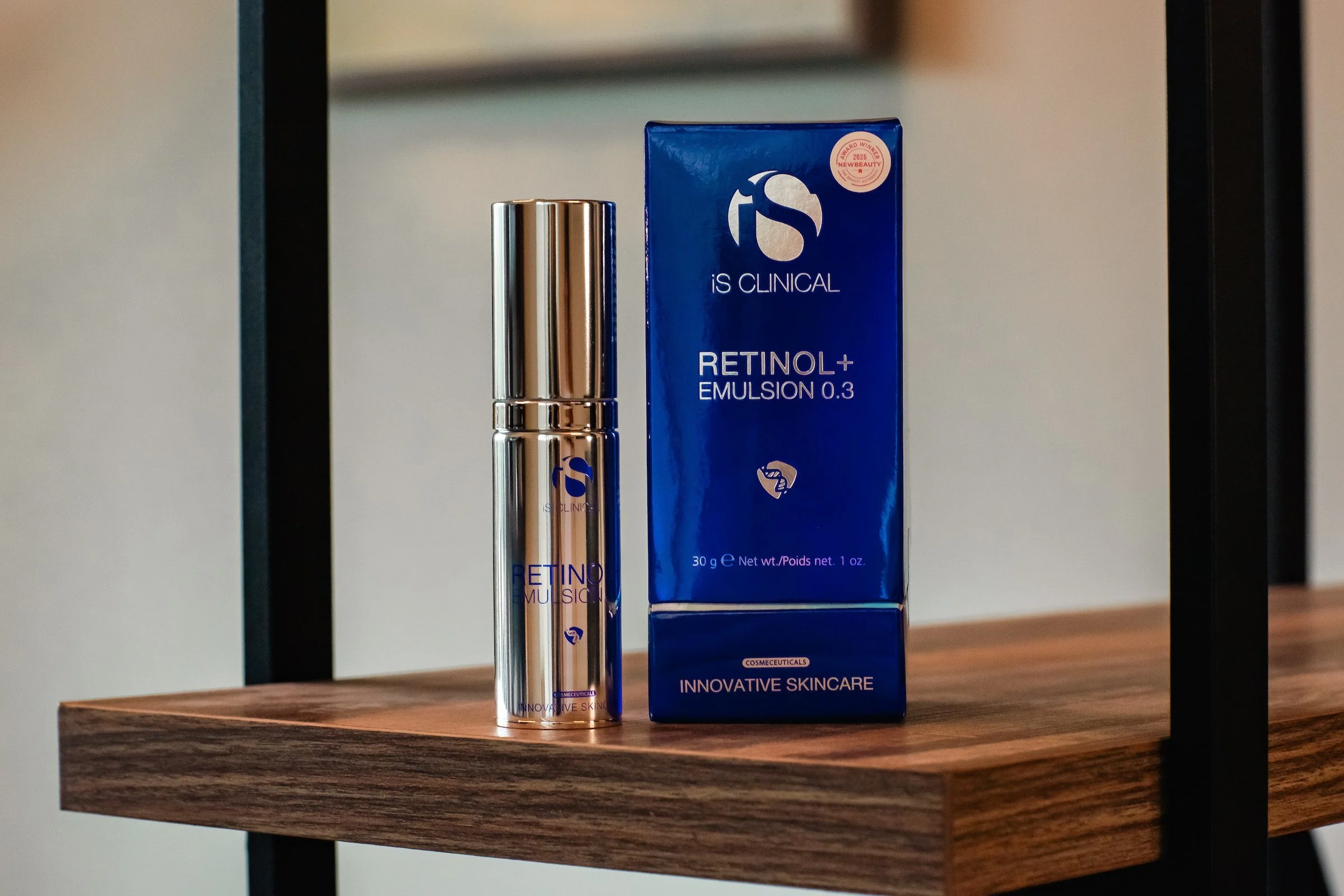
Medical-grade skincare — retinoids, peptides and vitamin C to support collagen production between in-office visits, along with daily broad-spectrum sunscreen, which does more for long-term skin quality than almost any single procedure
Sculptra, in select cases — when volume loss is contributing to how loose the skin appears, a biostimulator can help restore structural support over time
Isn't Ultrasound Skin Tightening (Like Ultherapy) an Option Too?
Ultherapy is a skin-tightening treatment some practices offer that uses focused ultrasound energy rather than laser energy to stimulate deeper tissue.
We don't offer Ultherapy at Hydro Med Spa. We focus on Fotona4D because it lets us address laxity, sun damage, texture and fine lines with one laser platform, with a treatment experience and downtime profile we're able to calibrate closely to each patient's skin and goals. If you're comparing energy-based skin tightening options, it's worth understanding that both categories exist — we simply believe our patients are best served by the approach we've built our protocols around.
How Does 'Heal, Reassess, Adjust' Play Out in Practice?
Back to our composite patient: after her first Fotona4D session and a microneedling treatment a few weeks later, she has a short healing period with some redness and mild swelling that resolves within days.
At her follow-up, we reassess — is the texture improving the way we'd expect at this stage? Is she seeing the tightening she was hoping for? From there, we adjust: maybe a second Fotona4D session is added, maybe her skincare routine gets a stronger retinoid, maybe we simply recommend a maintenance schedule spaced out over the next several months.
This is what a real skin plan looks like — it isn't one treatment and done. It's a process that responds to how your skin actually responds.
What Can't Treatment for Crepey Skin Do?
It's worth being honest about limits. No laser, injectable or skincare product can fully reverse decades of sun exposure or restore skin to what it looked like in your 20s.
Results from Fotona4D, microneedling and biostimulators develop gradually and vary from person to person, depending on your skin's starting condition, your sun exposure going forward and how closely you follow your plan. These treatments can meaningfully improve firmness and texture, but "can improve" is a more honest promise than "will fix," and we'd rather set that expectation clearly up front.
Frequently Asked Questions About Crepey Skin
Can crepey skin be reversed completely?
Not completely, but it can often be meaningfully improved. Treatments like Fotona4D and microneedling stimulate new collagen and elastin production, which can visibly firm and smooth skin over a series of sessions, though results vary by person.
How many Fotona4D sessions are typically needed for crepey skin?
Many patients start with a series of treatments spaced several weeks apart, followed by periodic maintenance sessions. The right number depends on your skin's condition and goals, which is why we build an individualized plan rather than a fixed package.
Does weight loss cause crepey skin?
It can contribute to it. Losing volume, especially quickly or in significant amounts (including during GLP-1 medical weight loss), can leave skin looking looser and more crepey than it did before, since the skin doesn't always contract at the same pace as the weight loss.
Is microneedling or laser treatment better for crepey skin?
It depends on your skin and goals. Microneedling is a gentler option well suited to texture and mild laxity, while Fotona4D laser treatment generally addresses tightening more directly. Many patients benefit from a plan that combines both over time.
What skincare ingredients actually help with crepey skin?
Retinoids, peptides and vitamin C all support collagen production, and daily broad-spectrum sunscreen is essential to prevent further elastin breakdown. Medical-grade skincare is typically formulated at concentrations that make a more meaningful difference than most over-the-counter options.
Schedule Your Skin Consultation →